quoted from International Journalists Network, published on Jan 2, 2023, you can refer to the original link from here
Why are women affected by climate change differently than men? I asked this question at the beginning of a press workshop held with the support of the Google News Initiative in the Greek camp in Cairo, in which I spoke about the topic of “gender and climate change,” which should be highlighted more. And “gender” as defined Global Health Organization It is a term that refers to the norms, behaviors, roles, and characteristics that society sets for men and women.
This guide provides a set of facts, sources and tools aimed at opening new horizons for journalists to write more stories about the relationship between women and climate change.
Reasons that make women more vulnerable to climate change
-Women bear more household burdens when resources are in short supply, such as collecting clean water and firewood.
When climate disasters occur and diseases and epidemics spread, women assume responsibility for caring for the elderly, children and the sick.
-Women bear the responsibility of providing daily food for the family when the men leave in search of livelihood in alternative places that have not run out of resources.
Girls are more likely than boys to drop out of education as a result of the deteriorating economic conditions of the family and cases of internal displacement resulting from climate change.
Girls in some of the communities most affected by climate change are exposed to early and forced marriage.
Girls are at increased risk of early pregnancy and associated death as a result of early marriage.
Several reports have monitored the link between climate change and the increase in violence against women.
-Women are more affected by climate change because they have limited options for adaptation as a result of the lack of information they have about climate change and about adaptation methods.
-Women are more vulnerable to losing their lives during climate disasters due to the lack of skills necessary to survive during emergencies.
-Most global climate change adaptation plans and strategies lack a gender perspective, mainly due to the lack of women’s participation in decision-making and policies.
-Studies and reports that include facts and figures supporting the above
–a report A talk on violence and climate change presented by Reem Al Salem, the United Nations Special Rapporteur on violence against women and girls, its causes and consequences, to the United Nations General Assembly, in October 2022. The report includes an account of the forms of violence to which women are exposed linked to climate change, such as: trafficking, sexual exploitation, and practices Harmful behaviors such as early marriage, child marriage, and school dropout.
According to the report's author:
“Emerging evidence shows that the negative impacts of global climate change exacerbate all types of gender-based violence against women and girls, from physical and psychological to economic violence, all while reducing the availability and effectiveness of protection mechanisms and further weakening the potential to prevent violence.”
-Guide entitled “Why leaders should invest in climate and girls' education“Published by the Malala Fund for the Right to Education in March 2021 includes figures on girls dropping out of education as a result of climate change, explaining and explaining the reasons. You can learn from this report that “climate change prevented 4 million girls globally in low- to middle-income countries from completing their education in 2021, and that there are expectations that the number will increase to 12.5 million girls in 2025.”
-Facts and figures published on location UN Women draws from the “Rural Women and the Millennium Development Goals” report, prepared by the UN Inter-Agency Task Force on Rural Women, which includes figures on the number of hours women spend fetching water daily, women’s education and employment, and the rates of women’s participation in decision-making And the percentages of their participation in agricultural work compared to the percentages of their ownership of land, and from the numbers that we know from the report:
- “Women in sub-Saharan Africa collectively spend about 40 billion hours a year collecting water.”
- “Less than 20 percent of the world's landowners are women. Women represent less than 5 percent of all agricultural landowners in North Africa and West Asia, while in sub-Saharan Africa they constitute an average of 15 percent.”
–a report An explainer published by the UN Women website in February 2022 entitled “How are gender inequality and climate change related to each other?” It includes information about how women and girls are affected by climate change in several areas.
–word UN High Commissioner for Human Rights Michelle Bachelet addressed an annual debate on women’s human rights during the fiftieth session of the Human Rights Council, in which she said that women and girls face “the harshest and most violent repercussions of climate change.” She pointed out that “displaced women represent 80 percent of those displaced due to climate change, and they are more at risk of violence, including sexual violence.”
-A set of training modules and summary versions prepared by him United Nations Development Programme On the Gender Dimensions of Climate Change Covering a range of topics and sectors such as agriculture, energy, food security, climate finance, adaptation and disaster reduction, it aims to provide a clearer understanding of the links between gender and climate change. It also includes a lot of information and figures that confirm that the gender gap increases the vulnerability of women in the face of climate risks and disasters. One of the figures included in the release indicates that women and children are 14 times more likely than men to die during disasters.
-The roles that journalism can play
-Raising community awareness of women’s vulnerability to climate change.
-Alert decision makers to current and future risks.
- Strengthening women’s voices and alerting them to their presence on the front lines of the confrontation.
-Accountability and making change.
-Monitoring and discussing solutions to help local communities adapt and talking about women’s roles in helping their communities and the importance of supporting them.
-Drawing attention to the fragility of some groups in particular, such as female farmers, refugees, and children.
-The most prominent issues that can be covered in newspaper stories
Girls drop out of education as a result of climate change.
The dangers that women face on their long daily trips to fetch water and firewood.
– Health damage resulting from women’s dependence on unclean cooking fuel (firewood) in a number of countries.
– Health risks to which pregnant women are exposed as a result of high temperatures or a lack of reproductive health services, such as premature births and sometimes death.
- Displaced women suffer from violence and women in general suffer from domestic violence related to climate change.
The impact of women farmers and their local ways of adaptation.
– Adaptation projects and initiatives dedicated to women in various fields and the need to support them.
– Campaigns and efforts made by organizations and networks interested in climate justice.
– National plans and projects and the extent to which they take gender into account.
-Networks and organizations interested in gender and climate change that can be contacted
These organizations implement many programmes, projects and campaigns aimed at achieving climate justice and supporting women and girls affected by climate change, such as providing education grants, supporting climate-smart agriculture projects for farms, clean cooking fuel projects, planting trees, and other projects aimed at enhancing resistance and building climate resilience.
-network Camfed To educate girls.
-institution Care.
-center Ban Ki-moon for Global Citizenship.
-organized Global Women and Gender. (Its membership includes 33 feminist, environmental and human rights organizations from different countries. You can find ways to communicate with them through this Link).
-initiative Empoderaclima.
-organized Green Congo.
-association Development of women and girls In Mozambique.
-institution Ugandan women smiling.
-Useful websites and links for journalists
These sites, networks, and organizations offer and provide educational materials, specialized fellowships on the topic of gender and climate change, production grants, journalism competitions, or publish inspiring journalism stories about women and climate change:
–Link A free training course on gender and the environment aimed at providing a clearer understanding of the links between gender and the environment was launched by the Global Environment Facility (GEF(and the United Nations Development Program)UNDP) and the Global Environment Facility (GEF) Small Grants Programme.
Tips for telling stories about women and climate change
-Make sure to hear the voices of affected women, and obtain strong and influential quotes from them.
-Make your story human and choose a specific angle for it. It is not preferable to discuss everything in one topic.
-Know your audience and address them in a language they understand. Create a simplified definition of specialized terms.
-Don't overlook the visual element in your story. Be sure to take photos and videos whenever possible, while being careful to respect the privacy of women and obtain their prior consent. Refrain from publishing photos and names of sources or any other details that might reveal their identity if you feel that this will pose a danger to them, especially in cases of violence to which women are exposed.
Here are a number of sites that can benefit from some of the features they offer for free in obtaining archival images and video clips or producing infographics in an easy way: Pexels, Climate visuals, Canva, Flaticon.
–Support your story with facts and figures that include broader circles of women in your city, country, or even across the continent who are exposed to the same thing, and do not neglect to indicate the source of the information.
-Interact with local and international events and find the women’s corner therein.
Example: You can find stories about women at the annual Conference of the Parties, such as coverage of sessions and demonstrations organized by organizations interested in climate justice on the sidelines of the conference, dialogue with feminist coalitions about their demands and messages during the conference, highlighting the voices of marginalized groups and those most affected by participation in the conference, such as this story.”African women farmers demand to be heard at COP27“.
-Do not portray women as victims all the time, and be sure to point out the roles they play in supporting their families and communities and the positive impact of involving women in adaptation plans and investing in their education and empowerment.
-Use experts and women in decision-making positions as sources for your story so as not to contribute to establishing stereotypes about women.
-Do not focus only on disasters, spread hope by telling the story from the perspective of solutions journalism, and leave space for local communities to present their own solutions and highlight women’s roles in them.
-Be sure to follow reports issued by international organizations such as various United Nations bodies and their affiliated agencies such as (UN Women, United Nations Environment Programme, Food and Agriculture Organization of the United Nations (FAO), United Nations Children's Fund (UNICEF), Global Health Organization, United Nations Development Programme, World Bank Climate Change Portal..) To benefit from the information and statistics contained therein about women.
-Continuously follow the websites of scientific periodicals and magazines to receive new studies that monitor the impact of climate change on women.
- Participate in webinars, conferences and training workshops that talk about gender and climate change to expand your knowledge of the issue and its various dimensions and build relationships with sources.
-Follow press websites specialized in environmental and climate change news to read stories that may inspire you with a new idea or a different angle regarding women.
Make sure to communicate with international organizations and bodies concerned with the issue and do not limit yourself to local sources. Use the websites of these organizations as a means of communicating with them, or search directly for your source via LinkedIn.
Translate your distinctive stories into English and share them on your social media accounts to help spread them outside your country. You will be surprised by the warm reception they receive, as stories of gender and climate change are still scarce even on the global level.
Examples of previous newspaper stories
–Clean fuel for cooking...the “absent right” kills millions of women annually.
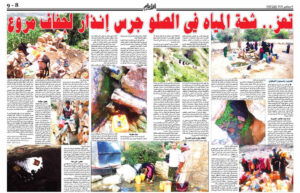
-In Egypt, female farmers are becoming climate smart.–
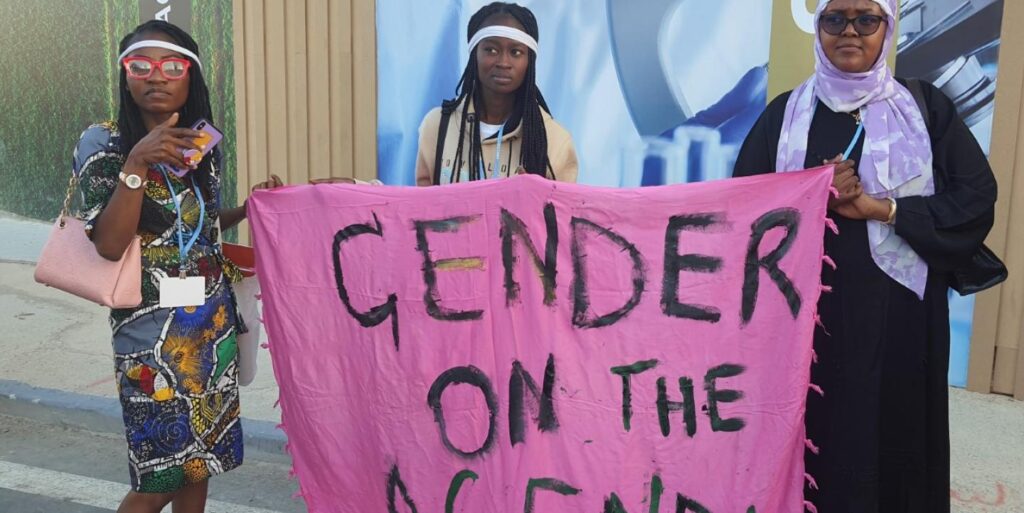
The main photo of women holding a banner demanding the inclusion of gender on the negotiating agenda at COP 27 in Sharm El Sheikh - photographed by Rahma Diaa.